About this gallery. These images are persuasive graphics created by Francis Hunt / “The Market Sniper.” The descriptions and readings below explain what each image depicts, the case it advances, and possible remedies or actions to mitigate against any risks proposed. Not financial, legal, or political advice. Instead, this gallery is best approached as a critical visual essay: a set of warnings, arguments, and prompts for independent thought.. Consider them critically for your own situation.
They willl never let you have your own money
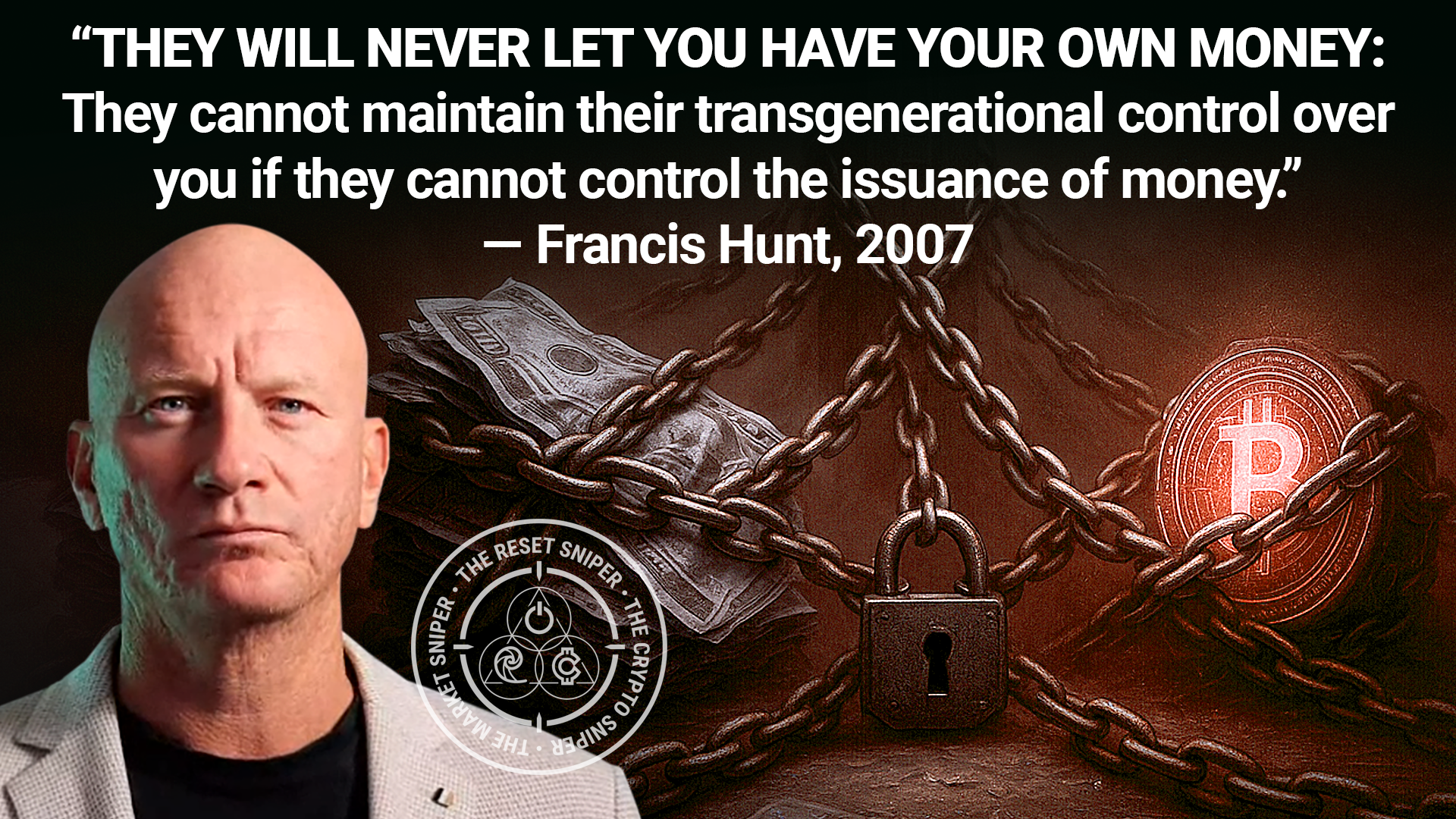
Keep meaningful amounts of physical cash (notes and coins) in your direct possession—true bearer money that cannot be frozen, programmed, or traced remotely. Complement it with self-custodied hard assets: gold and silver coins/bars, productive land, real estate with clear title, tools, and durable goods that hold value independent of any ledger.These assets lie beyond CBDC surveillance and programmable controls. They enable private transactions and preserve options when digital rails tighten.Practical steps:
- Store cash securely within your risk tolerance.
- Acquire and personally hold precious metals.
- Own real assets outright; minimize debt and custodians.
- Build skills and local networks for reduced dependence.
Sovereignty starts with what you can hold in your hand.
Tax Scavenge Mode
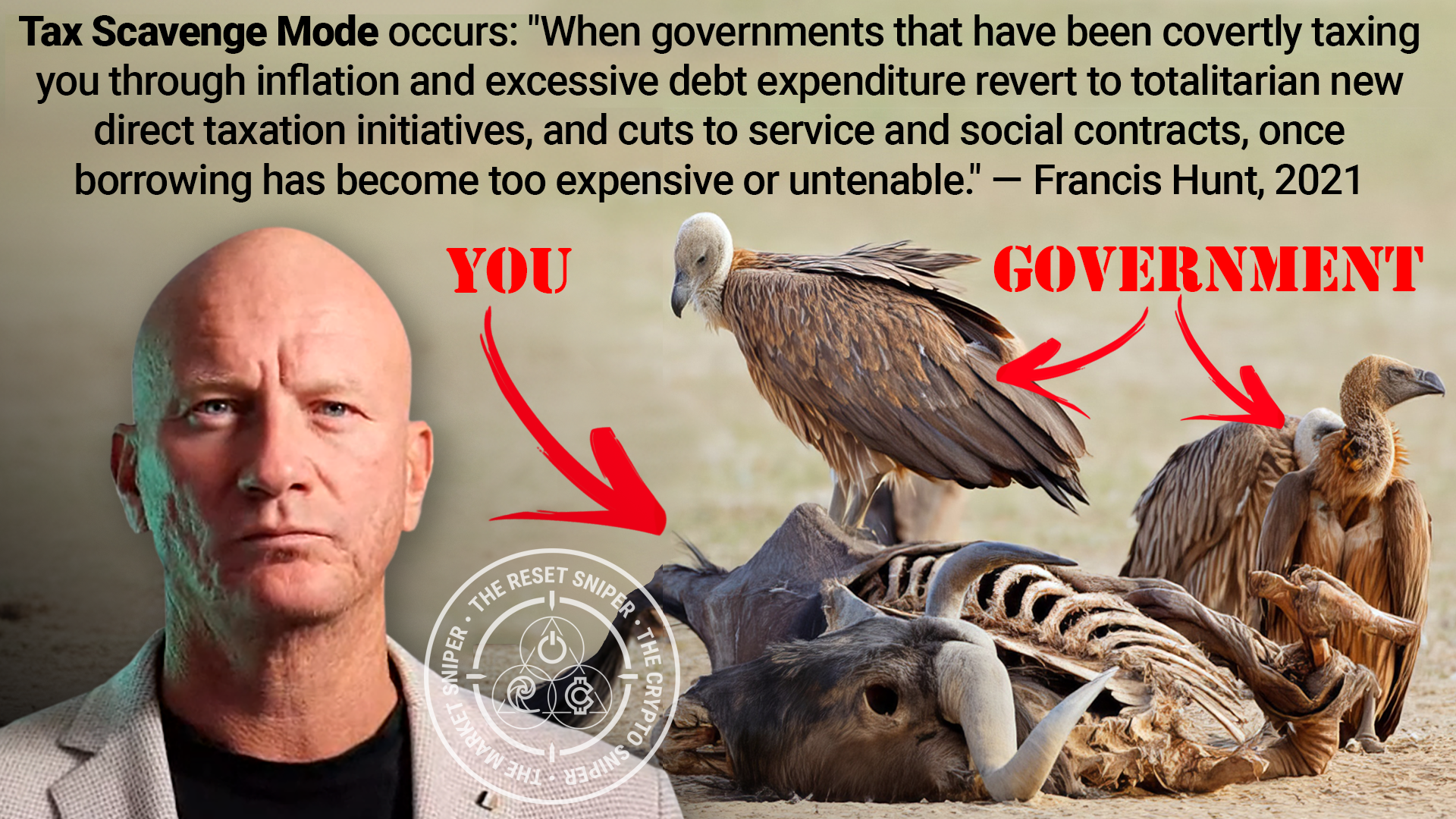
Governments operate in a fiat money system that incentivizes endless spending and borrowing. They quietly extract wealth from citizens through two primary “stealth” mechanisms:
- Inflation — By printing money to finance deficits, central banks erode the purchasing power of savings, wages, and fixed incomes. This acts as a hidden tax that doesn’t require legislative approval.
- Excessive debt — Politicians fund popular programs, bailouts, and entitlements by issuing bonds, kicking the cost down the road. As long as borrowing is cheap and investors buy the debt, the cycle continues.
This works until debt levels become unsustainable — interest payments balloon, bond markets demand higher yields, or lenders lose confidence. At that point, “Tax Scavenge Mode” kicks in: governments can no longer borrow cheaply or inflate without triggering collapse. They pivot to overt, aggressive direct taxation, wealth grabs, capital controls, and deep cuts to services and social contracts.In the meme, you (the taxpayer) become the carcass, and government (the vultures) descend to pick the remains clean. The vultures aren’t creating new wealth — they’re scavenging what’s left after decades of financial predation. The situation arises from structural incentives: short-term political gains, monetary manipulation, and the illusion that governments can spend without limit or consequence. When the bill finally comes due, the public pays the price.
Remedy: Diversify Residency, Citizenship & AssetsThe best protection against “Tax Scavenge Mode” is to stop relying on any single high-tax jurisdiction.Key Strategies:
- Geographic Diversification: Establish tax residency in low- or zero-income-tax places such as the UAE, Panama, or select Caribbean nations. Secure multiple residencies or second passports (via investment programs) to create real options.
- Favor Less Authoritarian Governments: Prioritize countries with stronger property rights, slower CBDC rollout, and greater tolerance for cash and physical assets.
- Layer with Hard Assets: Hold physical cash, gold, silver, and productive real assets in self-custody across different locations.
- Build Flexibility: Develop location-independent income and portable skills to reduce dependence on any one country’s rules.
The goal is optionality — never being fully trapped in one system. When one government tightens the screws, you can shift focus, assets, and residency elsewhere.
The Debt Pressure Trap
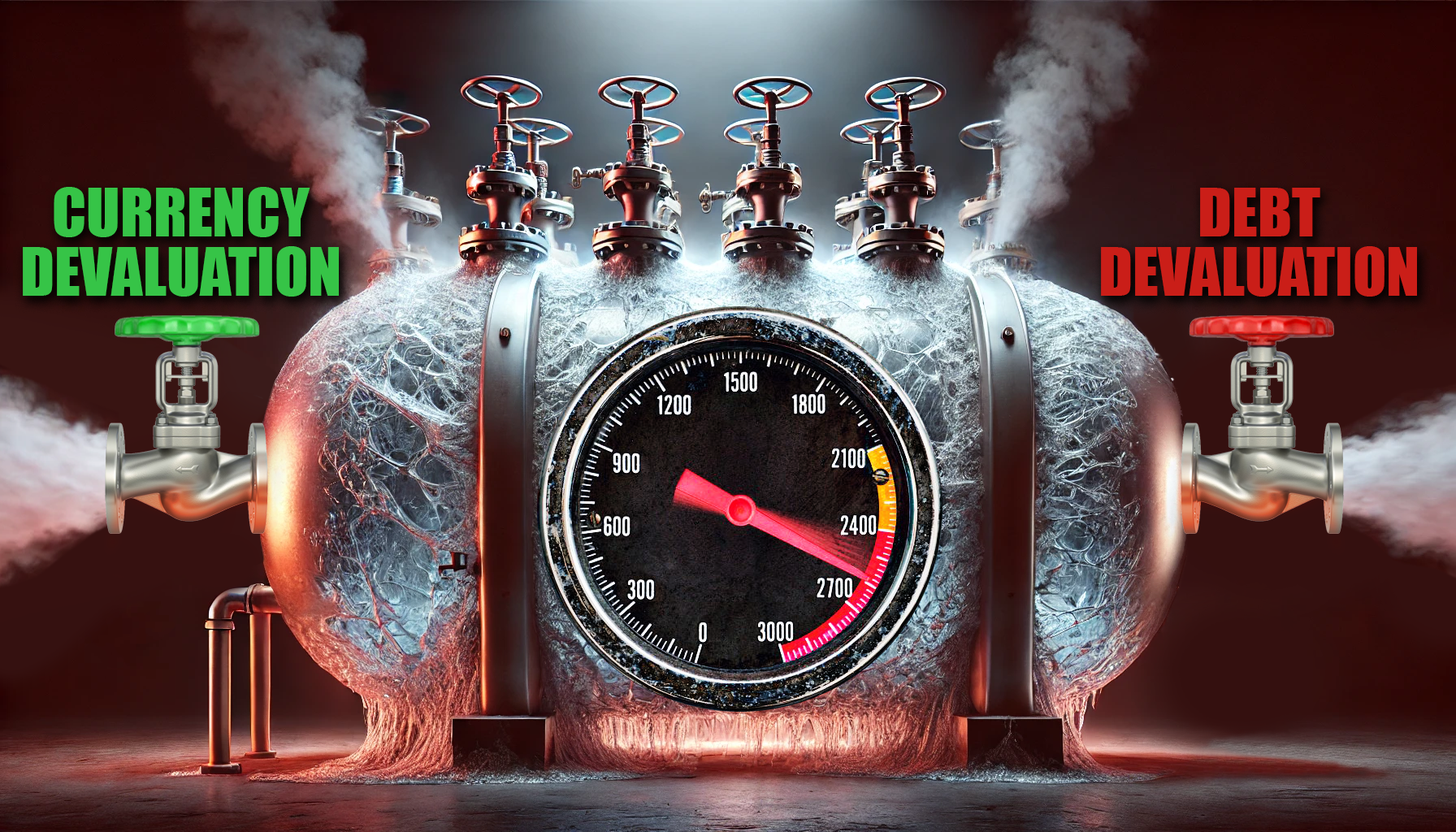
This meme depicts the unsustainable debt burden in major fiat economies, especially the US. The industrial tank symbolizes exploding government debt under extreme pressure. The gauge shows the crisis point, with two release valves available:
- Green valve (left): Currency Devaluation — Inflate the money supply to erode the real value of the debt.
- Red valve (right): Debt Devaluation — Restructure, default, or haircut the debt, hurting bondholders.
The controllers must eventually open one valve — both options are painful.Why This HappensFiat systems let governments and central banks create unlimited money and credit. This enables chronic deficit spending on entitlements, wars, and bailouts. Debt grows faster than the economy can sustain it, until interest costs become crushing.At the breaking point, leaders face an impossible choice:
- Inflate (currency devaluation) — A hidden tax that destroys savers’ purchasing power.
- Default/restructure (debt devaluation) — Triggers banking crises and economic shock.
They usually delay by printing and borrowing more, building even greater pressure. The meme’s message is clear: in over-indebted fiat systems, there is no painless escape. Someone must eventually pay — usually through inflation, austerity, or financial turmoil.
Remedy: Build Optionality and Hard Asset ResilienceThe best way to protect yourself from currency devaluation, rising taxes, and financial predation is to reduce dependence on any single fiat system.Core Positioning Strategies
- Hold Physical Hard Assets
Keep meaningful amounts of gold, silver, and cash in your direct possession. These cannot be remotely frozen, programmed, or inflated away. Add productive real assets like land or outright-owned real estate. - Diversify Jurisdictions
Establish tax residency or second citizenship in lower-tax, less authoritarian countries (e.g., UAE, Panama, or select Caribbean nations). Multiple residencies create real escape options when one government tightens control. - Develop Portable Income & Skills
Build location-independent income streams and portable expertise so your livelihood isn’t tied to any single high-tax jurisdiction. - Minimize Digital Custody
Keep only necessary funds in banks. Prioritize self-custody and limit exposure to programmable CBDC rails.
The goal is optionality — never being fully trapped in one collapsing system. Those who own tangible assets across borders and maintain flexibility will weather the inevitable currency or debt devaluation far better than those fully inside the system. Start small and build steadily.
Private Credit & Private Equity: The Credit Cycle’s “Well Poisoners”
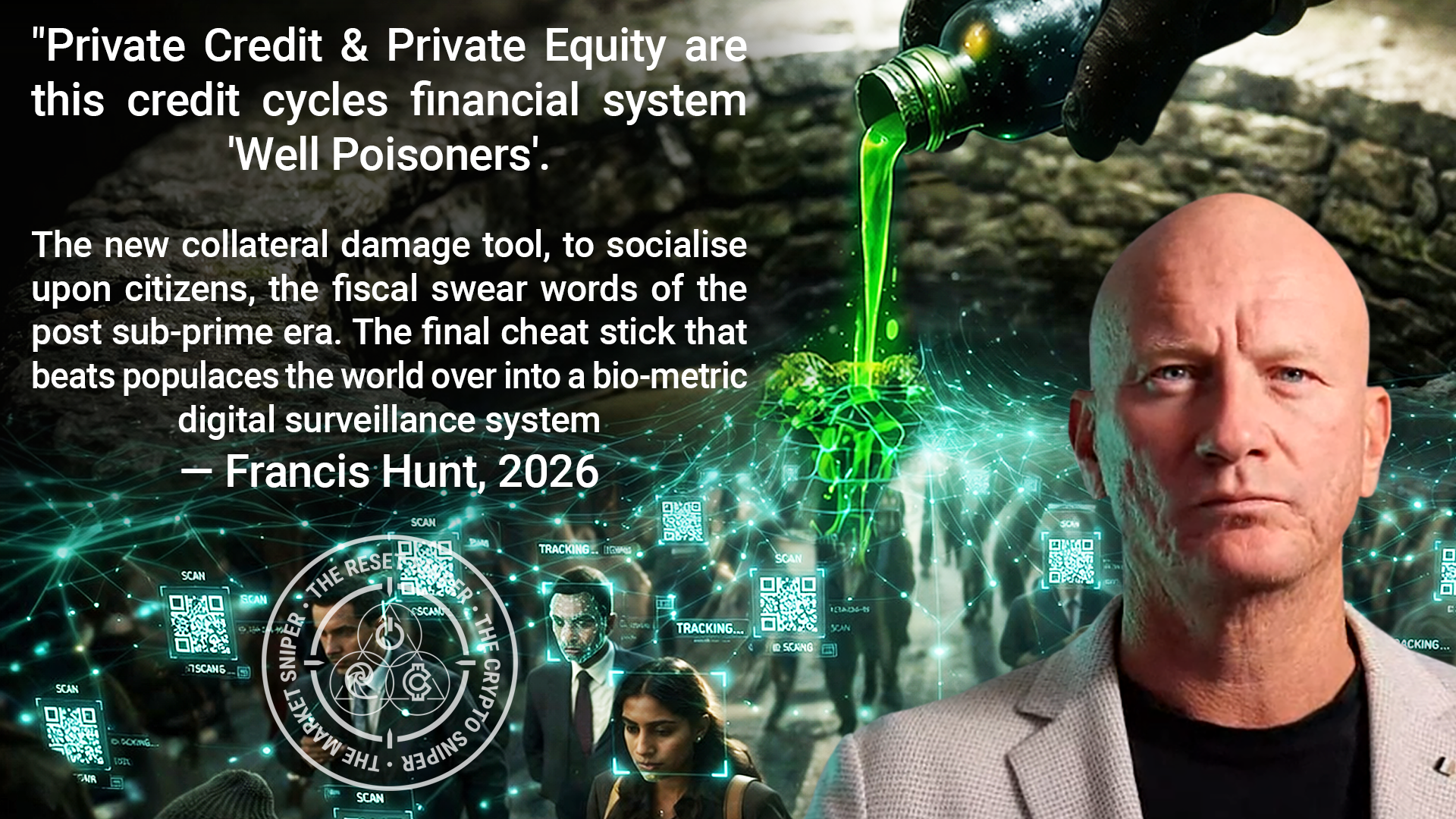
Remedy: Protect Yourself with Physical Sovereignty and OptionalityThe same core defences apply as with previous threats in this series:
- Hold physical hard assets in your direct possession — gold, silver, and cash outside the banking system. These cannot be remotely frozen, programmed, or diluted through digital ledgers.
- Diversify across jurisdictions — Establish tax residency or second citizenship in lower-tax, less surveillance-heavy countries (e.g. UAE, Panama, or select Caribbean nations). Multiple options give you mobility.
- Build portable income and skills — Create location-independent earnings so your livelihood is not trapped inside any single high-control system.
- Minimise digital and custodial exposure — Keep only what you need in banks. Prioritise self-custody of assets and limit reliance on programmable payment rails.
The consistent strategy across these memes remains the same: reduce dependence on any single fiat system and own tangible assets you can actually hold and control. Those who maintain physical resilience and geographic flexibility will be far better positioned when the next phase of extraction or surveillance tightens.
Money Is The Tool, Not The Goal
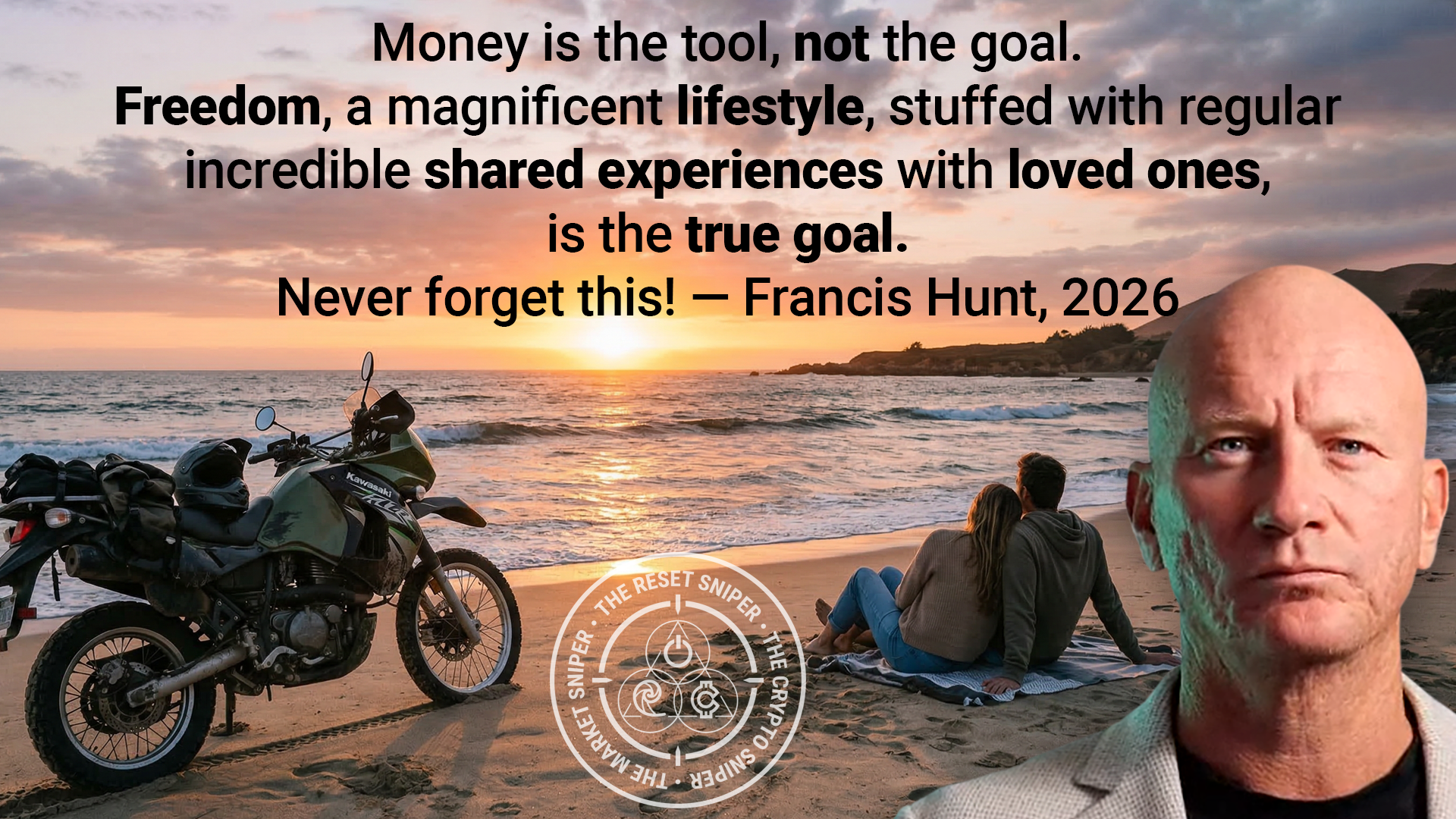
There is a quiet category error at the heart of how most people live: they treat the instrument as the destination. Money is a form of stored potential—optionality waiting to be spent—yet it is easily mistaken for the thing itself, and so the means quietly devours the end. A life organised around accumulation will always find the horizon receding, because a number has no natural ceiling and therefore no point of arrival.
The deeper claim is that a life is measured not in what is held but in what is lived. Freedom, presence, and shared experience are not luxuries purchased after the work is done; they are the substance of the thing the work was supposed to be for. To defer them indefinitely is to trade the only non-renewable resource—time, and the people you’d spend it with—for one that is merely useful. The instrument is meant to serve the life. When it becomes the master, the ledger may grow while the years, and the relationships, quietly do not.
Wisdom here is a matter of ordering: keeping the tool firmly in the role of a tool, and refusing to let a means masquerade as a meaning.
How This Is Attained Through Prudent Wealth-Building and Preservation
The philosophy only works if the money is actually there and stays there, which makes disciplined wealth-building the foundation rather than a contradiction of it.
Building begins with living below your means and converting surplus income into productive assets—a high savings rate is the single biggest lever, since it both funds investment and lowers the lifestyle cost you eventually need to sustain. That capital is then grown through long-horizon, diversified investing: broad ownership of productive assets, consistent contributions, and letting compounding do the heavy lifting while avoiding the fee-heavy, speculative churn that quietly erodes returns.
Preservation matters as much as accumulation, because freedom requires capital that survives downturns, inflation, and shocks. That means diversification across asset types and geographies, holding a cash buffer so you’re never a forced seller, insuring against catastrophic risks, and protecting purchasing power against inflation over decades. The aim is a portfolio durable enough that you can draw an income from it indefinitely.
The practical bridge to the true goal is reaching the point where assets generate enough to cover your desired lifestyle—financial independence—so that time, not money, becomes the constraint you optimize. Critically, the approach argues against waiting until the very end: as income and assets grow, deliberately spend on the freedom and shared experiences the capital was meant to buy, rather than postponing all of it to a someday that may never come on your terms.
In short, build steadily and protect what you’ve built so the tool stays sharp—then actually use it for the life it was meant to fund.